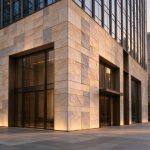

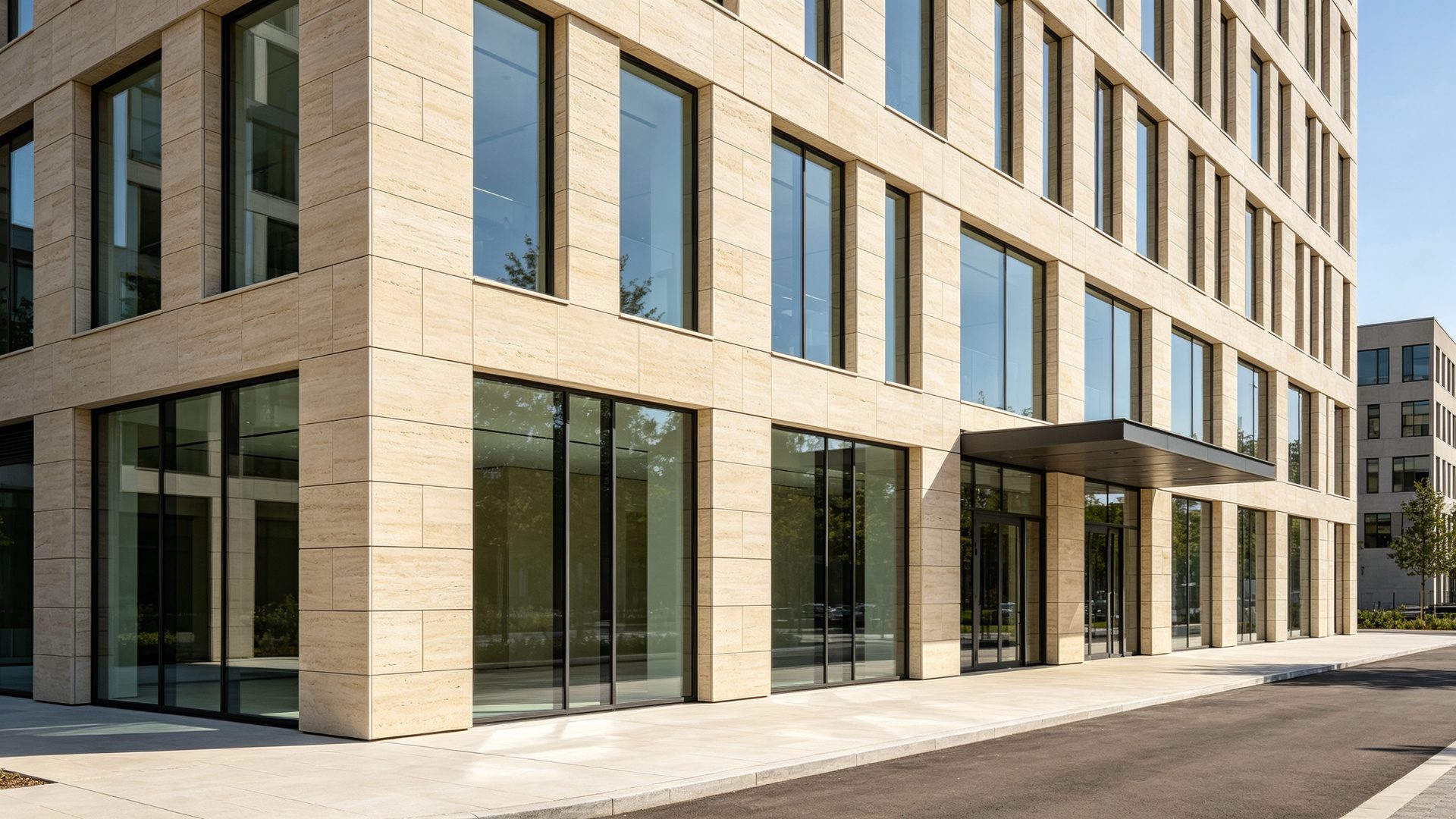
For decades, natural marble, granite and sandstone have been the default choice for premium building facades and interior feature walls. But a quieter shift has been happening across commercial projects worldwide: architects and contractors are increasingly specifying flexible stone veneer instead. The reason is not that natural stone has lost its beauty — it is that flexible stone solves the practical problems that have made natural stone expensive, slow and risky to install.
The Weight and Logistics Problem
Natural stone slabs typically weigh between 25 and 40 kg per square metre. On a mid-rise commercial facade, that weight drives structural steel requirements, increases dead load on slabs, and slows down every lift, crane and hoist on site. Flexible stone veneer is only 2–5 mm thick and weighs roughly 3–5 kg/m² — up to ten times lighter. The difference shows up immediately: faster delivery, simpler handling, less reinforcing, and lower shipping costs across international freight.
Installation Time and Labor
Natural stone requires a heavy-duty subframe, mechanical fixing, sealing after installation, and skilled masons who are increasingly expensive in most markets. Flexible stone panels are thin, bendable and can be applied directly onto cement board, plywood or drywall with adhesive — similar to large-format tiles. A two-person team can cover several hundred square metres per day. For hotel lobbies, shopping malls and renovated offices, that translates into weeks saved on the critical path.
Performance in Real-World Conditions
Modern flexible stone is manufactured from natural stone veneer bonded to a fibreglass and polymer backing. It is waterproof, fire-resistant, freeze-thaw stable and flexible enough to wrap around curved walls and columns without cracking. Unlike natural stone, it does not need sealing against stains, and it resists UV fading in exterior applications. For coastal or high-humidity climates, the lower porosity is a real advantage over porous limestone and marble.
Aesthetic Flexibility
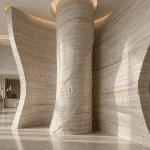
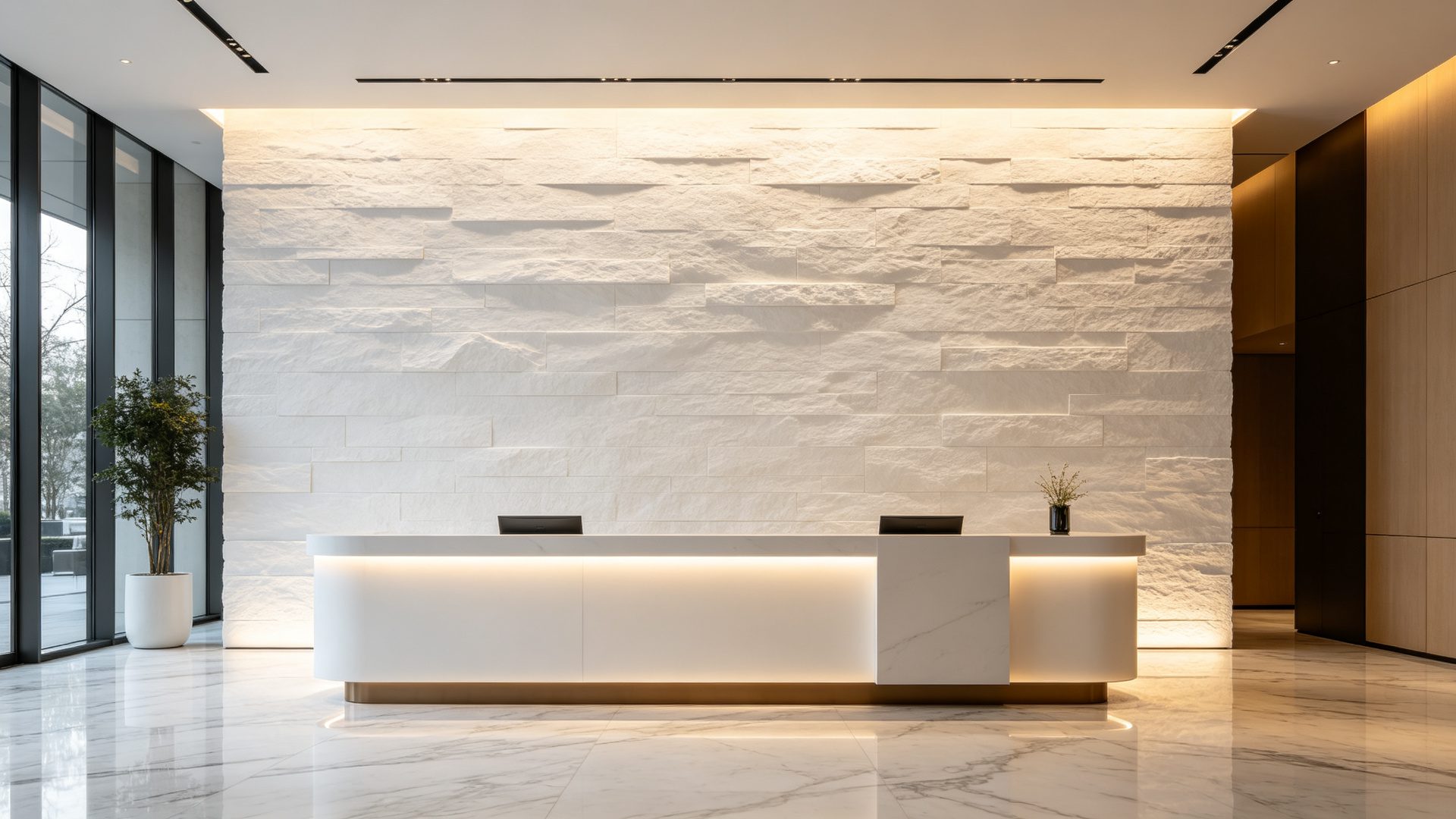
Because the material is a natural stone face, it still reads as stone — veining, texture, mineral variation and colour depth are all preserved. What changes is the format: panels can be cut into large sheets, bent around curved corners, backlit for feature walls, or laminated onto aluminium honeycomb panels for extra rigidity. Designers can match a limestone facade to a marble interior lobby without switching suppliers or compromising on consistency.
Total Cost of Ownership
When architects compare options, they rarely compare just the material price. Including transport, structural reinforcement, subframe, installation labour, sealing and maintenance over ten years, flexible stone typically lands at 30–60% below natural stone on the same scope. For renovation projects where access is limited and downtime matters, the savings are even larger.
None of this means natural stone is disappearing. Heritage buildings, iconic entrances and high-end residential lobbies will always use quarried marble. But for the majority of commercial facades, retail interiors and hospitality projects, flexible stone has become the more rational specification — beautiful, lighter, faster and cheaper to build.