
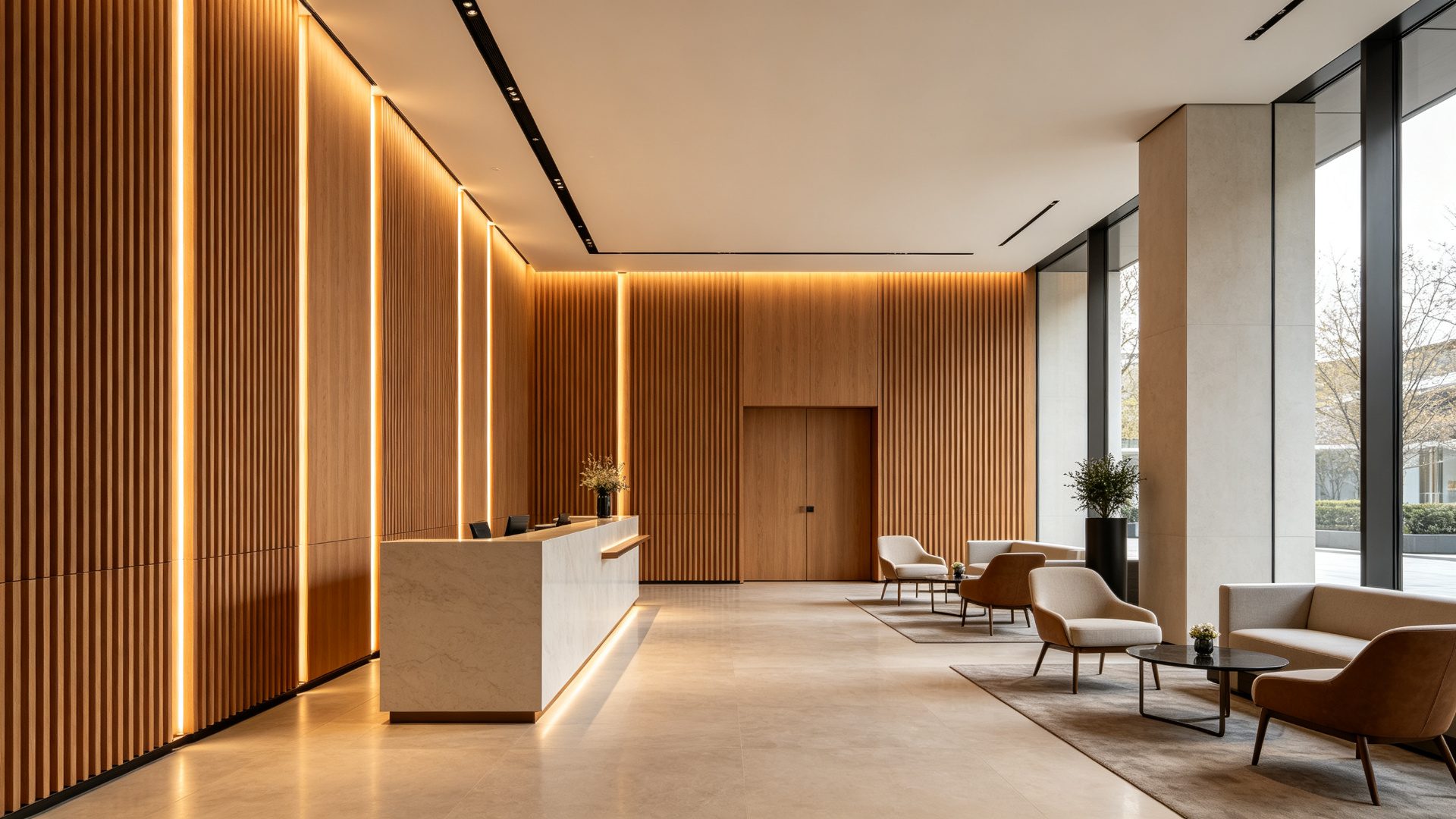
Vertical slat walls — the fluted, ribbed wood look seen in hotel lobbies, restaurants and premium retail interiors — have been one of the strongest interior design trends of the past five years. But the way designers and contractors are getting that look is changing fast. While solid timber battens used to be the default, WPC (wood-plastic composite) fluted wall panels are now the specification of choice for most commercial projects. This guide explains why.
What Are WPC Fluted Wall Panels?
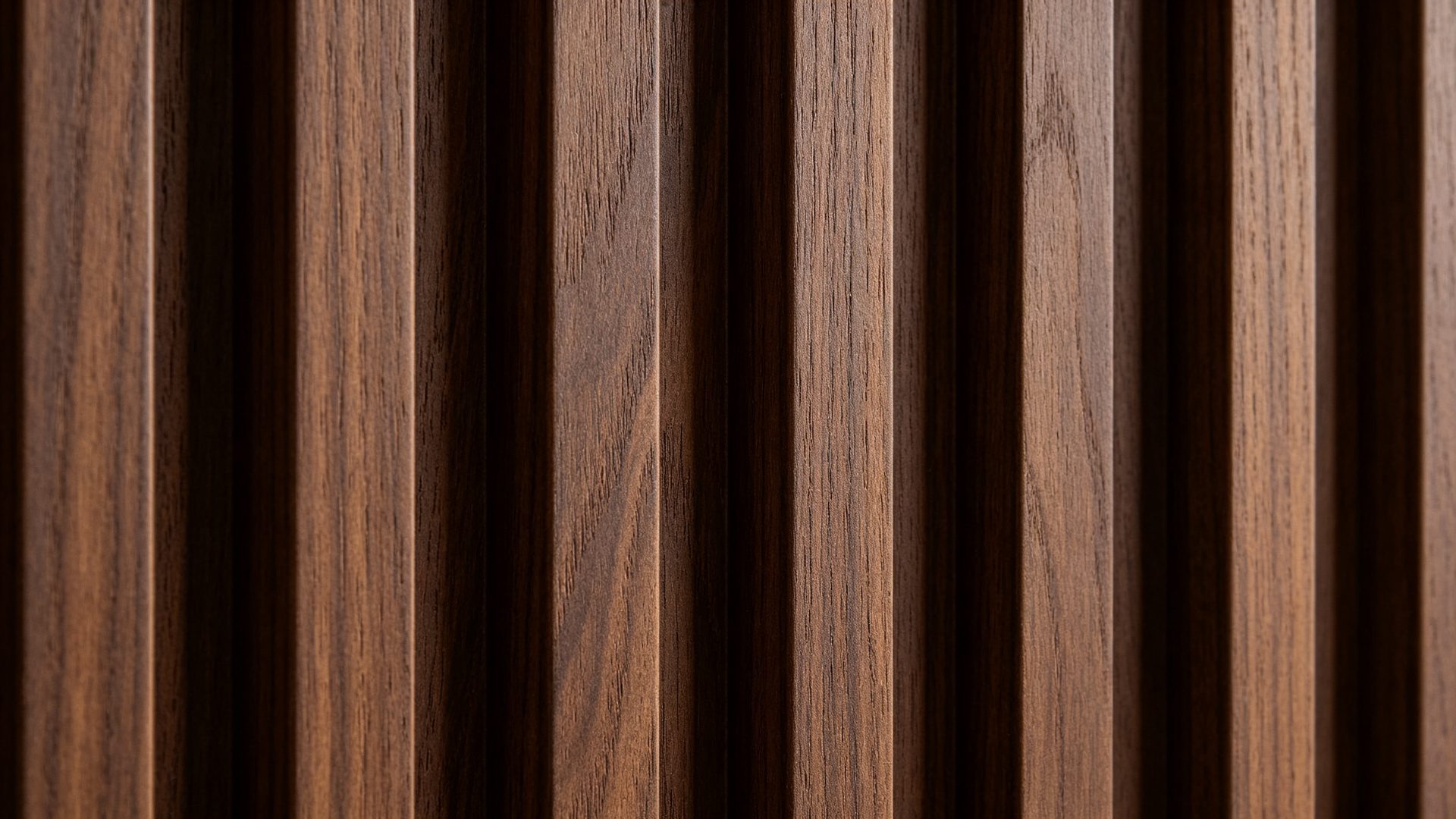
WPC fluted panels are extrusion-moulded boards made from a blend of wood fibre, recycled plastic and bonding agents. Instead of individual timber battens nailed to a frame, each panel is a single pre-finished sheet with vertical ridges already formed. Most panels are 12–24 cm wide, 2.9–3 m long and 15–25 mm deep, and click or glue together onto a flat substrate. The surface is usually a PVC or film laminate that reproduces oak, walnut, teak or even painted colours.
Cost Comparison: Material and Installation
Solid timber battens look beautiful but are expensive once you add the frame, the fixing, the sanding and the clear-coat finish. A traditional timber slat wall typically costs 180–350 RMB per square metre installed in China, and substantially more in Europe or North America once imported. WPC fluted panels, factory-finished and clip-on, usually land at 60–120 RMB/m² installed — roughly half the price. A two-person team can install 80–120 m² per day, compared with 15–25 m² for hand-assembled timber battens.
Performance: Moisture, Fire and Durability
Wood absorbs moisture, swells, warps and needs re-coating every 3–5 years in humid or high-traffic interiors. WPC does not absorb water, will not rot, and resists termites. It is rated B1 fire-retardant (self-extinguishing), which is a real advantage over raw timber in public buildings. The factory-laminated surface wipes clean with a damp cloth — a meaningful benefit in hotel corridors, restaurants and gyms where walls take abuse.
Aesthetics and Design Flexibility
The visual result is nearly identical to solid timber at normal viewing distance, because the surface film is digitally printed real wood grain. WPC panels also offer options timber cannot: integrated LED strip channels routed into the flutes, curved profiles for feature walls, and exact colour matching across an entire project. For interior designers, the consistency is a major advantage — no two timber batches look alike, but every WPC panel from one production run is identical.
When Solid Timber Still Wins
WPC is not the right answer for every project. High-end residential feature walls where clients want to see and feel real wood, heritage interiors, and exposed structural timber where the material itself is the statement — these are still better done in solid timber. Outdoor slat walls in direct sun and rain also favour aluminium or thermally modified timber over standard WPC, which can fade over decades.
For the vast majority of commercial interiors — hotel lobbies, office corridors, retail shops, restaurants and co-working spaces — WPC fluted wall panels now deliver the same design language at lower cost, faster installation and lower long-term maintenance. The trend is clear, and most interior designers have already made the switch.