
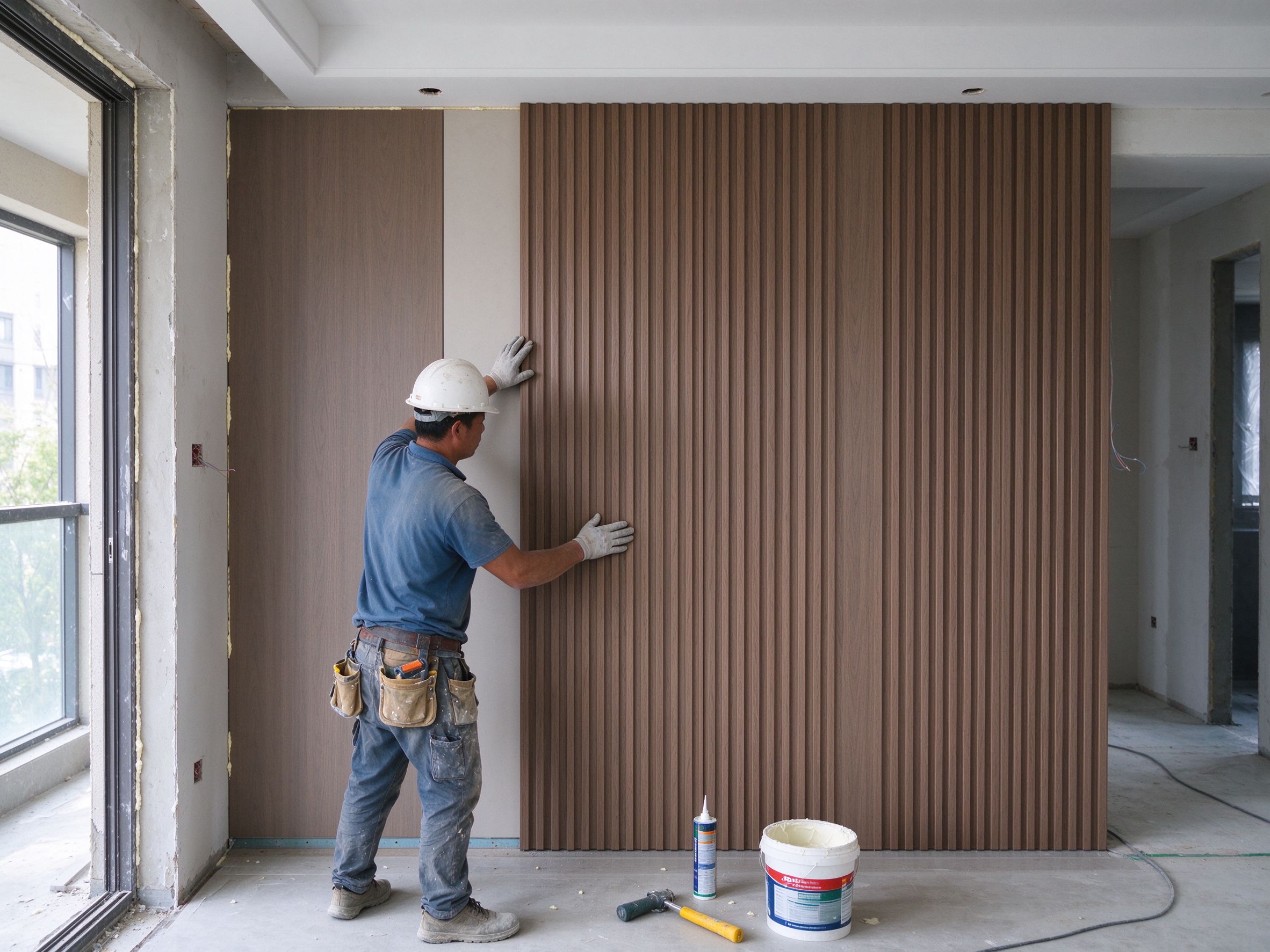
WPC (wood-plastic composite) fluted wall panels are one of the fastest-growing interior finishes in commercial and residential projects. When installed correctly, they create a textured, acoustic-friendly feature wall with minimal labor. This step-by-step guide covers the professional installation process.
Preparation and Tools
Before starting, ensure the wall surface is flat, dry, and clean. You will need:
- Tape measure, level, and chalk line
- Table saw or miter saw with a fine-tooth blade
- Construction adhesive (MS polymer or PU)
- Finishing nails or a pneumatic brad nailer
- U-shaped aluminum trim or end profiles for edges

Step 1: Plan the Layout
Start from a corner or an architectural feature (such as a door frame) and plan the panel direction. Fluted panels are typically installed vertically. Calculate the number of full panels needed and leave a 5–8 mm expansion gap at the top and bottom to account for temperature movement.
Step 2: Cut and Dry-Fit
Cut panels to height with a fine-tooth saw to avoid chipping. Dry-fit the first row to confirm the pattern and alignment. Check that the tongue-and-groove joints click together cleanly. If a panel does not seat fully, trim the groove edge lightly.
Step 3: Apply Adhesive and Secure
Apply construction adhesive in zigzag beads on the back of each panel, then press firmly against the wall. Add 2–3 brad nails through the tongue edge for extra holding power. The nail holes will be concealed by the next panel’s groove.
Step 4: Continue and Trim
Slide each subsequent panel’s groove over the previous tongue, ensuring a tight fit. Use a rubber mallet and a scrap block to tap panels together without damaging the fluted surface. At the final row, cut the last panel to width and cover the exposed edge with an aluminum U-profile.
Step 5: Finish and Seal
Once all panels are installed, seal the top and bottom gaps with a matching silicone sealant. Clean the surface with a damp cloth — no further painting or finishing is required, as WPC panels come factory-coated.
Common Mistakes to Avoid
- Skipping the expansion gap: WPC expands and contracts with humidity. Panels butted tightly together will buckle.
- Using the wrong adhesive: Never use water-based glue; it will cause the panel edges to swell.
- Ignoring wall flatness: Uneven surfaces telegraph through thin fluted panels. Furr out the wall if deviation exceeds 3 mm over 2 meters.