
One of the most common mistakes new importers make is comparing factory prices instead of landed costs. A panel that looks cheap FOB Shanghai can become surprisingly expensive by the time it reaches your warehouse. This guide walks through every cost factor so you can quote projects accurately.
What Is Landed Cost?
Landed cost is the total price of an imported material delivered to your door. It includes product cost, packaging, inland freight, export handling, ocean freight, insurance, import duties, taxes, and final-mile delivery. Only by calculating landed cost can you compare suppliers on an apples-to-apples basis.

The Cost Formula
Use this baseline formula for wall panel shipments:
Landed Cost per m² = (FOB Price + Ocean Freight + Insurance + Duties + VAT + Destination Charges) ÷ Total m² Shipped
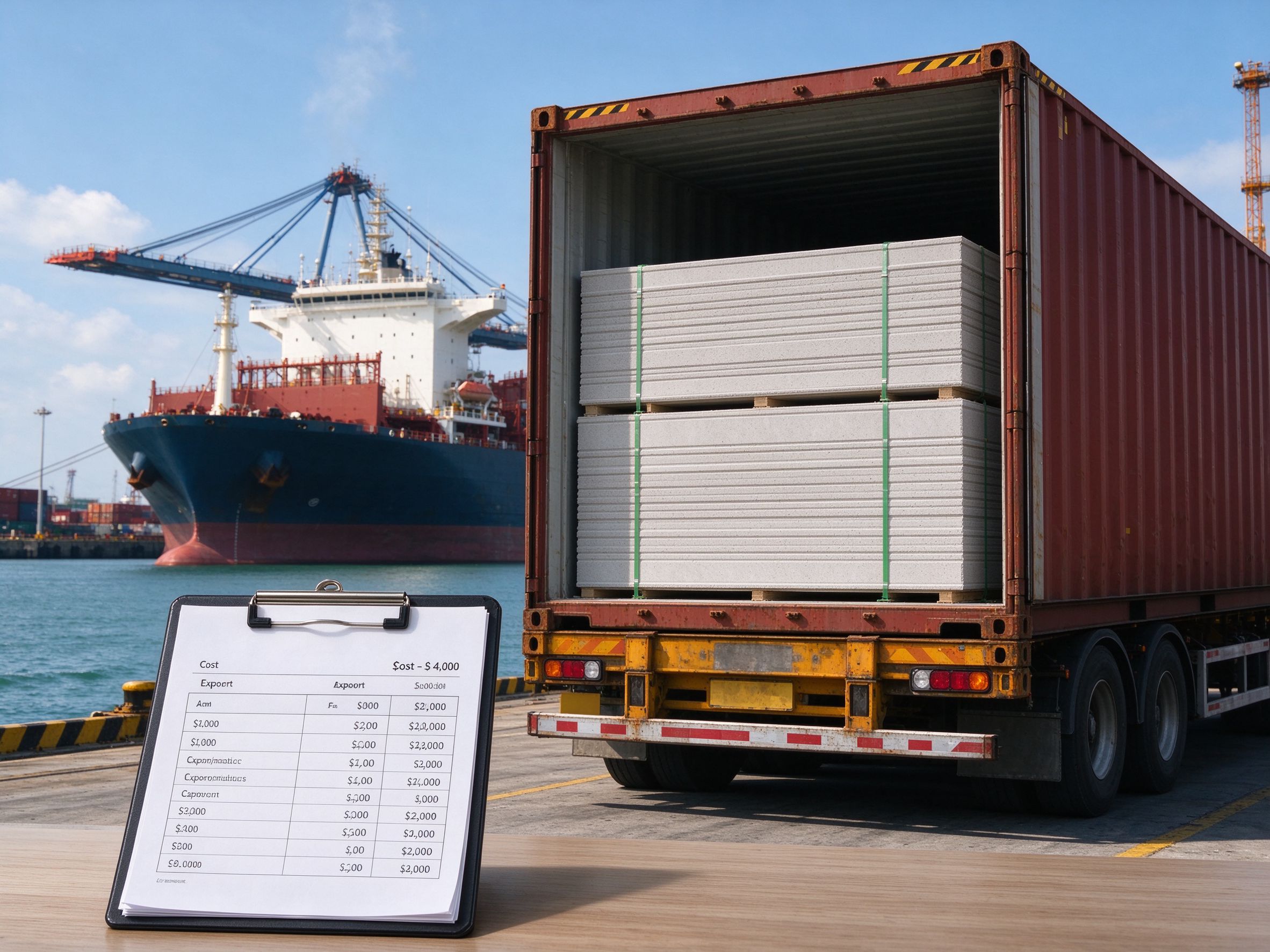
Ocean freight for a 40HQ container of wall panels typically ranges from $1,500 to $4,500 depending on the destination and season. Import duty for PVC-based wall panels is usually 5–8% in most markets, while flexible stone veneer may fall under a different HS code — always confirm with your customs broker.
Hidden Costs Importers Overlook
- Packaging and crating: Panels must be packed in seaworthy wooden crates; weak packaging leads to edge damage claims.
- Warehousing and handling: Port storage and container unloading often cost more than expected if you have no local broker.
- Currency fluctuation: Lock your exchange rate or include a 3–5% buffer when quoting projects.
- Sample and travel costs: Factory visits and pre-shipment inspection add up across multiple orders.
How to Compare Suppliers Fairly
Request landed-cost quotes from at least three suppliers using identical specifications, packaging, and Incoterms (usually FOB). Ask each supplier to break out ocean freight separately — factories often inflate this line to make their product price look lower. A supplier offering a slightly higher FOB price but faster lead time and better packaging may deliver a lower true landed cost over the project lifecycle.