
When you are specifying wall cladding for a new build or a renovation, the debate between flexible stone veneer vs stone tile comes up fast. Both give you a real stone look. The difference is in weight, installation method, cost, and where each one actually performs best. This guide breaks it down so you can pick the right material for the job.
What Is Flexible Stone Veneer?
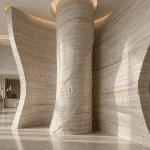
Flexible stone veneer (also called MCM stone panel, or modified clay material panel) is a thin layer of real stone surface bonded to a flexible backing. The stone face is typically only 2–4 mm thick, and a finished panel weighs roughly 3–5 kg per square metre. Because it bends, it can wrap around curved columns and radius walls that rigid tile simply cannot follow.
Our interior and exterior flexible stone veneer panels use a genuine stone slice, so the texture and veining are authentic — not a printed pattern.
What Are Traditional Stone Tiles?
Traditional stone tiles are cut from solid granite, marble, slate, or limestone. Typical thickness is 10–20 mm, and they weigh 25–50 kg per square metre. They are rigid, dense, and extremely hard-wearing, which is why they remain the default for floors and heavy-traffic areas.
Weight and Installation
This is where the two materials diverge most.
- Flexible stone veneer is applied with a standard tile adhesive or polymer mortar directly onto prepared substrates (cement board, plaster, existing tile, or even some metals). Crews can cover more area per day, and the panels cut with a utility knife.
- Stone tile needs a flatter, stronger substrate, more bed mortar, and careful levelling. On lightweight partitions or older buildings, the extra weight can require structural reinforcement.
For retrofit projects where you cannot add load, waterproof fireproof flexible stone tiles for wall cladding are usually the safer choice because the wall carries far less weight.
Cost Comparison
On material price alone, stone tile and flexible veneer can sit close together depending on the stone grade. The real saving with veneer is labour and logistics: lighter cartons mean lower freight, easier handling, and faster installation. A typical factory-direct MOQ is around 100 m², with lead times that vary by finish — confirm current figures with the supplier before you specify.
Durability and Best Use Cases
- Choose flexible stone veneer for feature walls, curved surfaces, lightweight substrates, prefab modules, and renovation cladding where added weight is a problem.
- Choose stone tile for floors, wet areas with heavy foot traffic, and surfaces where maximum impact resistance is the priority.
Both are suitable for interior and exterior use when the right adhesive and sealing system is specified. Fire performance and water resistance depend on the exact product and substrate — ask for the test report for your project.
How to Choose for Your Project
- List the substrates you need to cover and their weight limits.
- Flag any curved or radius surfaces — veneer wins here by default.
- Estimate total area and compare installed cost (material + labour), not just the per-m² price.
- Request samples and, for exterior jobs, the relevant weather and fire test data.
FAQ
Is flexible stone veneer real stone?
Yes. The visible face is a slice of natural stone; only the backing is engineered for flexibility.
Can it be used outdoors?
In most cases yes, with a suitable outdoor adhesive and sealer. Verify the specific product rating for your climate.
Which is cheaper to install?
Veneer is usually cheaper installed because it is lighter and faster to fix, but get a written quote for your wall condition.
Does it need sealing?
Many finishes benefit from a penetrating sealer, especially in exterior or high-humidity locations. Check the manufacturer recommendation.
Conclusion
There is no single winner in flexible stone veneer vs stone tile — only the right fit for the wall in front of you. If weight, curves, or speed matter, veneer is hard to beat. If you need maximum floor-grade impact resistance, tile still leads. Want samples or a cladding quote for your project? Browse our flexible stone veneer range or contact Starleader for factory-direct pricing.
Authored by YAN, Starleader — a factory-direct Chinese building-material exporter with years of experience supplying flexible stone veneer, aluminium honeycomb panels, and WPC wall cladding to importers, architects, and contractors worldwide. Not sure which cladding fits your spec? Reach out for a quote and technical data sheets.